Mila Craig was in class and on the verge of a panic attack. The sophomore’s heart was racing, the walls felt like they were closing in and she could feel her anxious energy building up. She needed to get it out and leave, but then she remembered an old friend—a pair of metal rings.
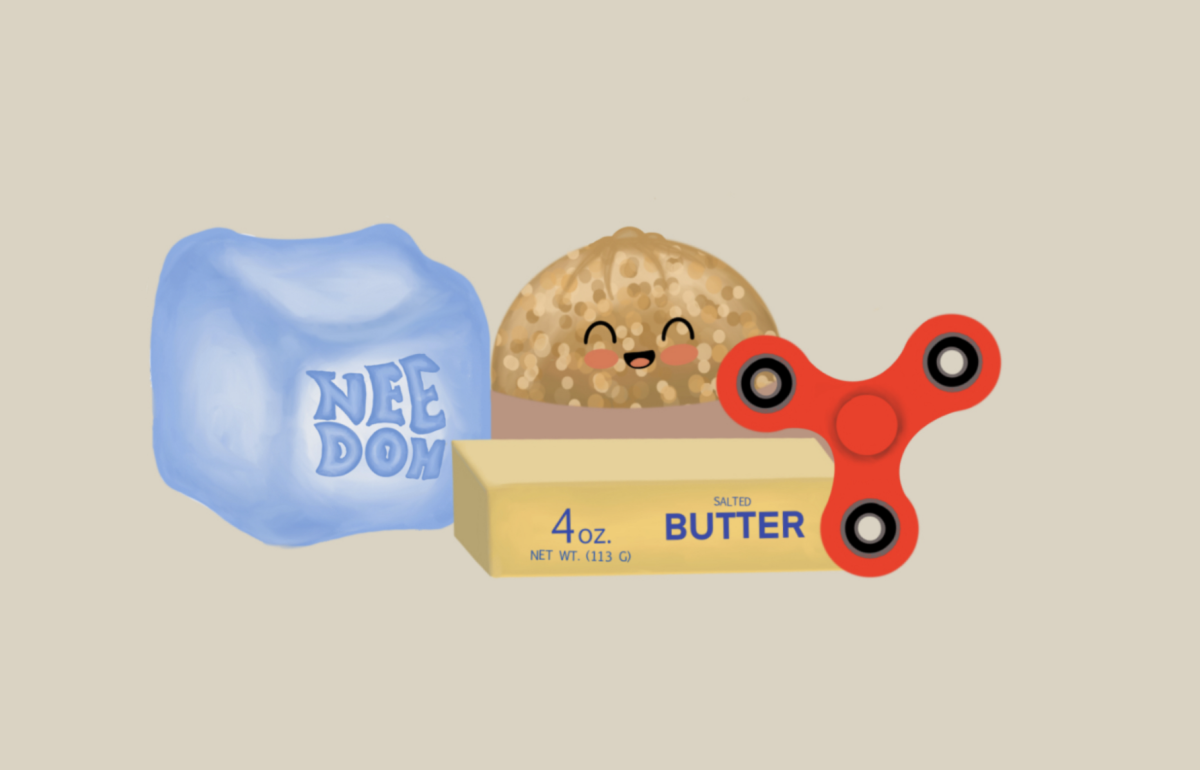
Those rings were fidget toys—designed to help people expend their nervous energy and concentrate. They vary from metal spinners to plastic pop-its to squishy, scented sticks of butter, and they work by sending constant sensory input, giving people an outlet for their excess energy and allowing them to focus their thoughts.
“They are hard to explain,” Craig said. “But I love them.”
Fidget toys can be found in practically every backpack and classroom in the School. Students, feeling the need to unwind, often borrow them.
“My friends steal them all the time,” said Craig. “But for me, it’s not a trendy thing, it just helps calm me down.”
Originating as toys to help children with autism, ADHD or other disorders focus on schoolwork and therapy, fidget toys have also helped relieve some of the stigma around neurodiversity.
“It is so cool that these are all around the school at St. John’s,” Upper School Counselor Claire Wisdom said. “They really help with breaking down the stigma of wanting or needing to use something to improve concentration.”
Wisdom, who received her therapist’s license in 2021, originally worked in a hospital setting. She first noticed a large number of fidget toys in the adolescent parts of the hospital, and then saw them spread all over as both patients and doctors alike discovered their usefulness in managing stress. When Wisdom came to St. John’s, she was happy to learn that fidget toys are widely accepted.
“I’ve noticed that a lot of teachers allow them in their classrooms,” she said. “It’s kind of a ‘no questions asked’ thing, which is really cool.”
These types of toys have been the subject of fads since the fidget cubes and fidget spinners in the early 2010s, with a brand of soft plastic cubes currently serving as the most recent one. Called NeeDohs, they were subject to intense popularity on TikTok and consequently achieved worldwide fame, especially among middle and high schoolers. The trend has caused Schylling, the company that makes NeeDohs, to suffer from a severe shortage of the popular product. According to the company’s CEO, the entire year’s stock sold out in the first month of the year.
“My brother is in sixth grade, and he says that girls will show up to school with four NeeDohs at a time,” Craig said. “And they’re bragging about all the new ones they got and how they want to get the special, rare gold ones.”
Craig is skeptical about the sincerity of the trend.
“It feels like Labubus all over again. It’s more the idea of having something that’s popular rather than people actually enjoying them,” she said. “People have always liked them, but they have randomly spiked recently because people just decided they were popular.”
Random or not, trends like this can bring many benefits. According to the Population Reference Bureau, anxiety has grown 40% in the last few years among young adults, and the growth in fidget toy popularity seems to corroborate that statistic. As the toys fly off the shelves and into fidgety hands, more people are finding ways to manage stress and anxiety, especially students.
“I love St. John’s, but it is a school that is really rigorous. The anxiety tends to be pretty high here,” Wisdom said. “It can be a great tool to ground yourself.”