
The moment her son Jack was diagnosed with autism in 2015, Liz Selig’s life shifted. What had once felt like a clear picture of motherhood suddenly became uncertain, filled with questions she did not yet know how to answer.
Like many parents, Selig, who attended St. John’s in middle school until 1989, had preconceived notions for her child’s development. She expected that milestones like speech, schooling and independence would unfold in a predictable way. Suddenly, Jack faced communication barriers, sensory sensitivities and developmental delays that made everyday routines difficult to accomplish. He was later diagnosed with epilepsy, adding another layer of medical complexity that required ongoing monitoring.
Tasks that seemed simple for other families required patience and adaptation.
“There’s not one place you can go,” Selig said. “You’re trying to figure out what to do today and tomorrow, not 10 or 15 years from now.”
Finding support was difficult. Waitlists for evaluations could stretch over a year. Some providers charged thousands of dollars, and her efforts to navigate school resources proved frustrating.
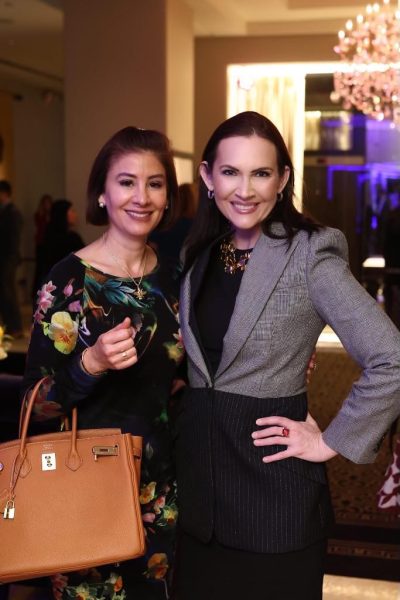
But rather than step back, Selig leaned in. She was always an avid volunteer from the time she was a teenager since it was a central part of her upbringing. Her son’s diagnosis only strengthened her commitment. Her experience with Jack motivated her to collaborate with local spaces to create inclusive environments. Under her recommendation and guidance, Bank of Texas was the first corporate sponsor to support and underwrite sensory friendly days at the Children’s Museum of Houston. These events, filled with dimmed lights, reduced noise and crowds so that children like Jack could participate without feeling overwhelmed.
“It’s just a much more conducive environment,” Selig said.
As she continued navigating her own journey, Selig noticed another critical gap: financial planning for families of children with special needs. Raising a child from birth to adulthood averaged to over $200,000, not including higher education in 2022. As a result, many parents are unprepared for long-term financial needs.
In response, Selig organized a free special needs financial planning seminar, bringing together experts to explain tax deductions, special needs trusts and ABLE accounts, tools that allow families to save for their children without jeopardizing eligibility for government benefits.
“You’re so overwhelmed at the beginning,” Selig said. “You’re not thinking about when your child turns 18.”
Her advocacy did not stop there. Selig took on leadership roles in fundraising events for the museum and became an informal guide for other families, sharing resources and advice for navigating the early years after a diagnosis. She later launched Music Knows No Boundaries, a fundraiser inspired by Jack’s love of music. The event raises money for organizations that provide direct financial support to families, especially those in the middle-income gap.

“I wanted to help families directly and be the shoulder to lean on that I never got,” Selig said.
Selig’s commitment extends beyond autism advocacy. Through work with a forensic nursing organization, The Forensic Center for Excellence, she helps improve care for victims of violence. She works with survivors of sexual assault and domestic abuse whose voices are often silenced by their own family and community.
“If we can help at least one victim not be turned away, then that’s amazing,” Selig said.
Looking back, Selig views her journey into voluntary advocacy not as a single decision but as a series of moments where she chose to act.
“If I can make someone else’s journey a little bit easier, that matters.”