As Bad Bunny enthusiast Andy Trejo watched the Super Bowl halftime show, one Easter egg stood out to her: a small boy sprawled across three chairs, using a football as a pillow as he napped through a “long, raucous” Hispanic wedding.
“The whole scene was culturally accurate,” Trejo said. “When I saw the kid that was sleeping across the three chairs, I realized that I’ve been that kid.”
The NFL chose Benito Antonio Martínez Ocasio, more commonly known as Bad Bunny and currently the number one streamed artist globally, to headline the Super Bowl halftime show. Bad Bunny is known for blending rap, pop and reggaeton in his music and often uses his platform to speak out on the issues facing his home island of Puerto Rico and the Latin community.
The decision to make Bad Bunny the 60th performance sparked immediate controversy. Upon the announcement in September of last year, conservative leaders and activists criticized the appointment as unrepresentative of the larger American public, as he sings primarily in Spanish and his songs are deeply rooted in Hispanic and Puerto Rican culture. Critics also noted his tendency to defy gender norms through fashion choices like wearing skirts and nail polish, claiming that such a performance would only push the nation further apart.
His show drew a near-record of 128 million viewers, and videos of his performance have accumulated over four billion views across all platforms.
The National Football League had the opportunity to revoke Bad Bunny’s headlining spot earlier this year. Despite controversy, the NFL stood with their decision.
“The NFL is also really a diverse community,” Trejo said. “So, they stood their ground on their decision to pick Bad Bunny to show that they stand with their people and their diverse community.” Bad Bunny often speaks out against the conservative party’s agenda, including the actions of Immigration and Customs Enforcement. After his album “DeBÍ TiRAR MáS FOToS” became the first Spanish-language album to win the Grammy Award for Album of the Year, he said in his acceptance speech, “We’re not savage, we’re not animals, we’re not aliens. We are humans, and we are Americans,” in reference to Hispanics and immigrants being deported.
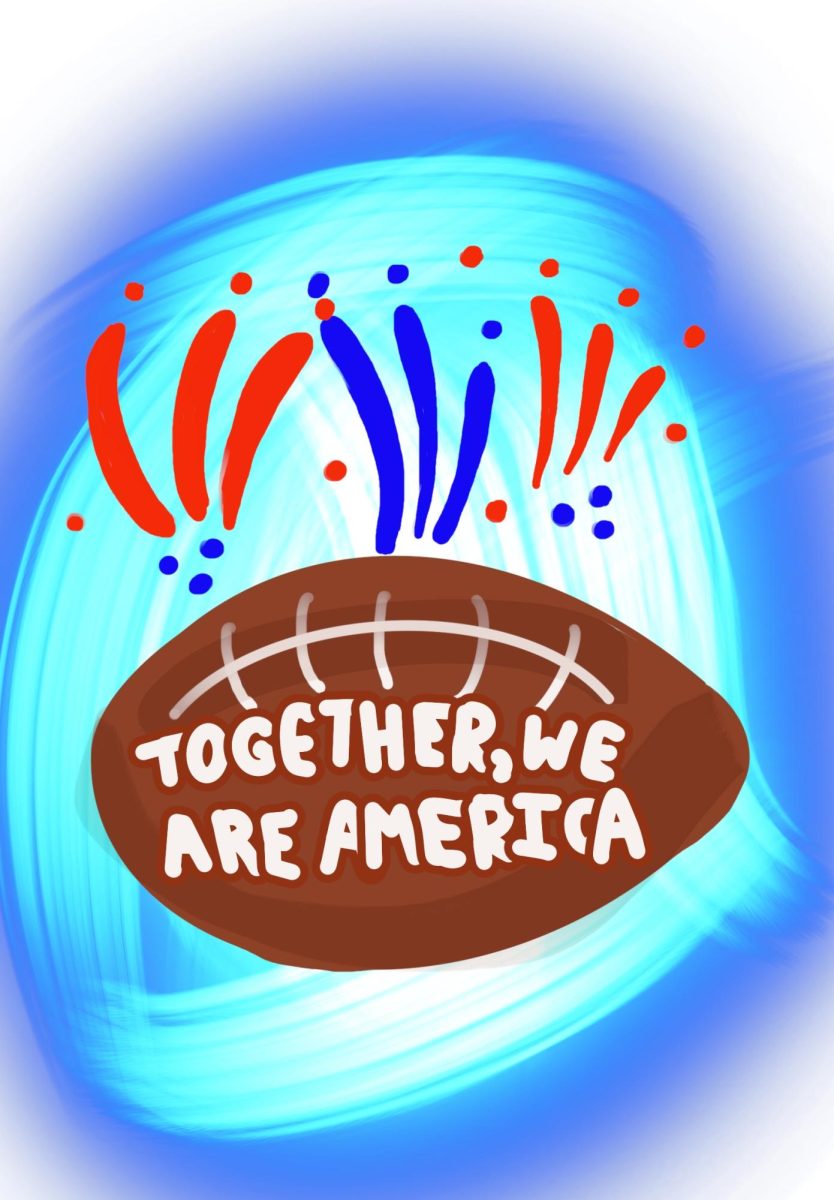
This message was prevalent throughout Bad Bunny’s Super Bowl performance, as he continually repeated the phrase “Together We Are America.”
In response to the performance, Turning Point USA, the prominent conservative organization founded by Charlie Kirk, ran its own show during the Halftime show as counterprogramming. It aimed to create an “All-American” performance starring singer Kid Rock. The show, which streamed live on YouTube, garnered about five million viewers.
Trejo strongly opposed the alternative: “We’ve all had performances that people have really liked in the past, but going and making a completely different halftime show is just insane.”
Even though Bad Bunny only performed in Spanish, the language difference did not matter for many. Freshman Isabel Kalavar sees his choice to speak in Spanish as a contributing factor to his popularity.
“It’s important that he performed in Spanish because that’s part of his culture,” Kalavar said. “People like him because he’s famous for singing in Spanish.”
Although many other artists who are not from the continental United States have performed and headlined at the Super Bowl before, such as Coldplay, U2, Paul McCartney, The Rolling Stones and Rihanna, many see Bad Bunny’s performance as “Un-American.” But when Bad Bunny performed with Jennifer Lopez and Shakira in 2020, there was no backlash. Trejo notes that the trio would likely be controversial now.
“If Jennifer Lopez and Shakira performed again, they would also face backlash, especially considering everything that’s happening with ICE,” Trejo said.
Latin Americans like Trejo have chosen to stand with Bad Bunny, since he represents something more than just a musical artist for them. Trejo, who has been to his concert in Mexico City, notes that he encourages his fans to band together.
“He really fosters a sense of community at his concerts,” Trejo said. “He constantly says, ‘I’m Puerto Rican, and you’re Mexican, but together we are American.’”