
The morning of the cookout, senior Ian Miller woke at 5 a.m. and tiptoed over his sleeping friends in the living room. As he walked into the kitchen, the smell of last night’s spices immediately hit him. A foil tray lay on the counter beside a meat thermometer and a cutting board stained with last night’s seasoning. Miller took the freshly-trimmed brisket out of the refrigerator, carried it outside to the grill and began the longest part of the cookout: the wait.
“Throughout the whole day, we’re checking on the brisket, and also we put more things on the go like ribs or chicken,” Miller said.
Miller hosts these cookouts with fellow seniors David Qian and Harrison Wright. The process begins the day before with a grocery run. Once in the kitchen, they season, trim and marinate the brisket. Miller monitors the meat as it cooks. Wright moves through the kitchen, shifting people into stations. Together, they have turned the cookouts into a routine that stretches throughout a full day and pulls in friends who want more than a quick meal.
“The brisket is kind of a staple for our cookouts,” Qian said. “No matter what the theme is, there is always a brisket.”
The first cookout began one afternoon in June 2025 when senior Andrew Roberts wanted to grill with his friends. The original group stayed small, with Roberts and a handful of friends focused on honing their cooking skills. The group grew when the brisket came off the grill and the hosts realized that sharing the food made more sense in a larger event.
“We thought, ‘If we are going to make a brisket, we should share it with everyone,’” Qian said.
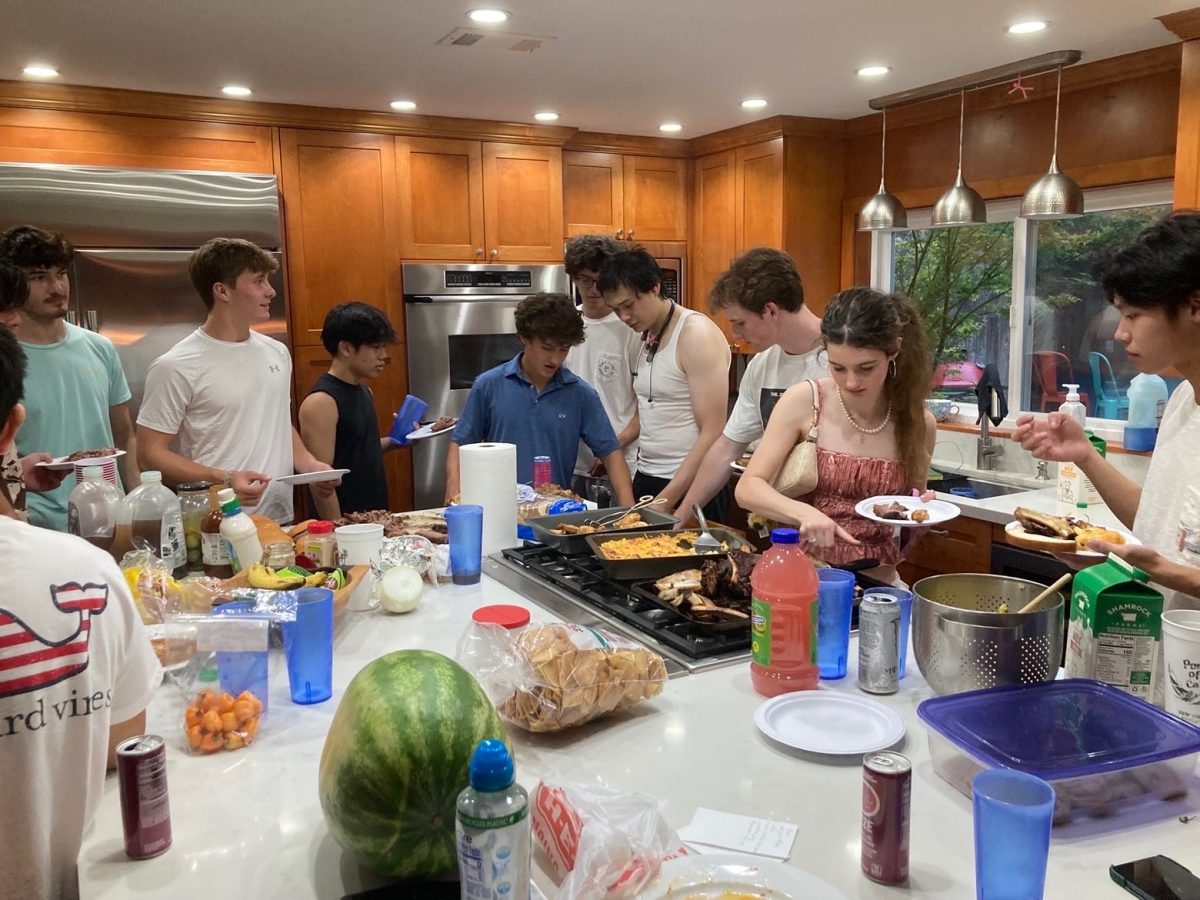
Since the summer, the cookouts have returned during breaks. The event has become a much-awaited point on the calendar, a reason to regroup when the year scatters people into separate plans. Now the cookouts draw about 20 to 30 people.
“It’s fun to cook, ” Miller said, “but it’s even more fun if your friends can come over and enjoy it.”
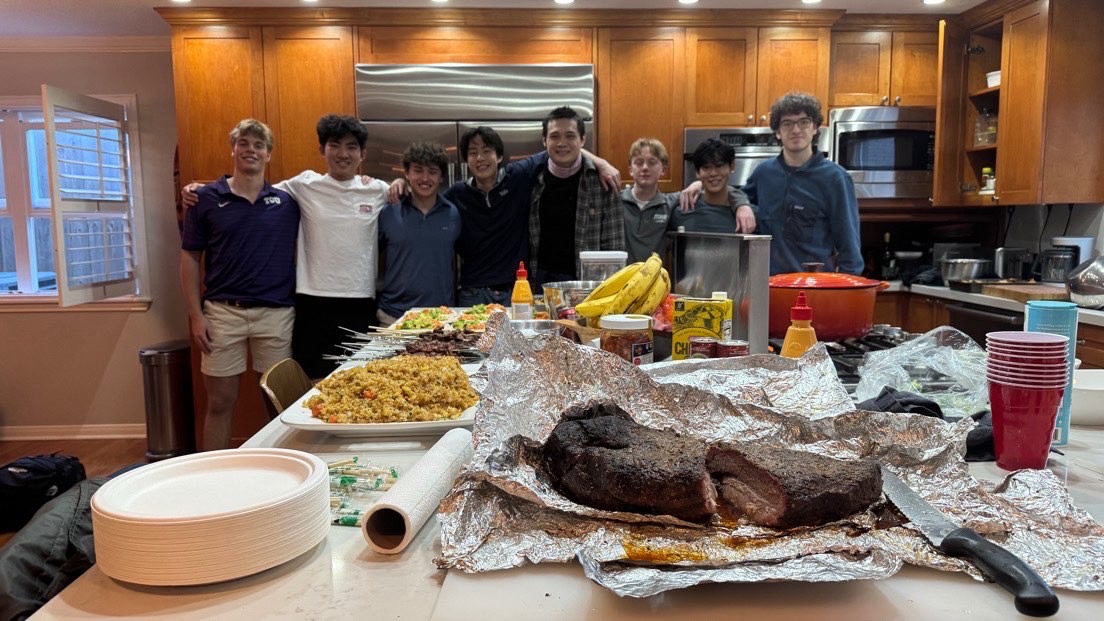
As the cookout attendance grows, the group fills the gaps with additional dishes and kitchen support. Because the hosts want each cookout to feel distinct, the menu involves new dishes every time.
Early cookouts leaned into traditional barbecue, with brisket and ribs as the main draw, but a more recent cookout included dishes like Korean beef, chicken kebabs and poke bowls. The group uses YouTube to learn techniques and timing, then turns to ChatGPT when they need to build a menu around the ingredients stocked in their pantries.
“I am a big proponent of using ChatGPT to make recipes,” Wright said. “If you have a certain amount of ingredients, you can ask, ‘What can I make with this?’”
The tool helps the group scale dishes for a crowd and skip recipes. If they have extra vegetables, a bag of rice and a protein, they ask for options that match a theme and serve their group size. The group then adjusts based on what the kitchen can handle.
Guests do not only arrive to eat. Many also bring sides to share, such as mac and cheese or vegetables, then step into the kitchen to help cook and plate as the meal comes together.
The hosts face another challenge before cooking even begins: a cost barrier. A brisket can cost about $80 and the total grocery bill for a cookout can run about $400. To cover that cost, the chefs ask guests to contribute $10 to $20. Some guests forget to pay, leaving the hosts to cover the gap.
“Our goal is not to profit,” Qian said. “We collect more money so we can continue hosting these cookouts.”
Cooking for a crowd has taught the group how to move with purpose in the kitchen, clean as they go and coordinate timing across multiple dishes.
“You can try a lot of stuff you normally would not,” Qian said, “because you have more people, money and time.”
By late afternoon, the brisket board sits scraped clean and foil trays stack in the sink as friends drift between the kitchen and the backyard.
“Food really does bring people together,” Miller said.