
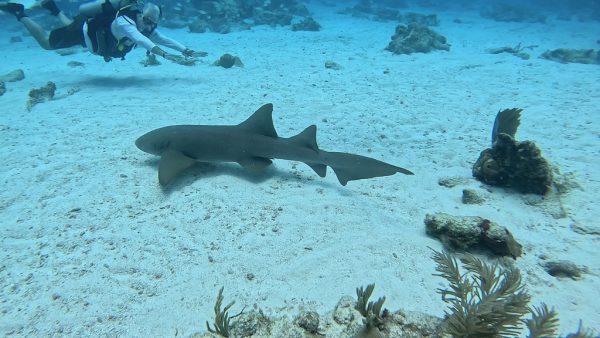
Lini Raghavan used her scuba diving license for the first time in the Florida Keys. As Raghavan swam to the bottom of the Atlantic, around 60-feet deep, she welcomed a group of new friends to swim on top of her: a shiver of nurse sharks.
After attaining her license in 2022, junior Raghavan has been on dives in the Keys, Catalina Island and off the coast of Hawaii. Both her parents received their scuba diving licenses when they were younger.
“I love the ocean. The different animals and coral reefs were always something I loved looking at and learning more about.”
Like Raghavan, junior Annie Voorhees also wanted to get her license because of her parents. Right after her 10th birthday, Voorhees started taking diving lessons at Gigglin’ Marlin Dive and Swim to get scuba-diving certified.
“My mom and my dad have been scuba diving together since they were in their twenties,” Voorhees said. “They had all these great scuba diving memories, and when my brother got his license, they all got to go deep underwater while I would have to stay up at the top and snorkel.”
In order to get her license, Voorhees took the Professional Associations of Diving Instructors Open Water Diver course, which taught her safe diving practices like blowing bubbles and communicating nonverbally.
After 15 hours of courses, Voorhees had to complete the “rite of passage” before obtaining her license: the final dive at Lake 288.
“I remember it was Mother’s Day, and my mom came and did my dive with me,” Voorhees said. “It was the most disgusting lake I’ve probably ever seen, but my brother also took his test there. It’s almost like a tradition.”
Upon receiving her license, Voorhees and her family have taken countless diving trips. They frequently visit Cozumel, Mexico, since it is a short flight and convenient trip overall. When they were younger, her parents befriended a dive master who took them on dives every time they visited.
Raghavan remembers having to take weekly classes in Pearland before taking her final diving assessment in a blue lagoon.
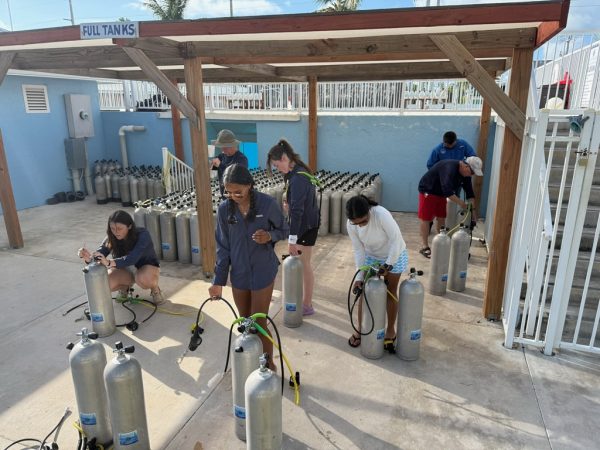
“We had to go to a swimming pool to practice some skills, and then we did two open dives at a lagoon full of artificial plankton and shrimp,” Raghavan said. “It was gross, but I’m glad I did it.”
There are variants of scuba diving, including open water, cave, deep water and night diving. Voorhees has recently started to participate in night diving since the biodiversity is usually more active and interesting after dark. On her first night dive, there were a lot of equipment and safety regulations in place to ensure safety.
“There’s a big, chunky flashlight, and we also have to be very careful because of bloodworms, because they are attracted to the light,” Voorhees said. “In the moment the night dives can sometimes be scary, but I have gotten to see bright blue octopi before, and that was really cool.”
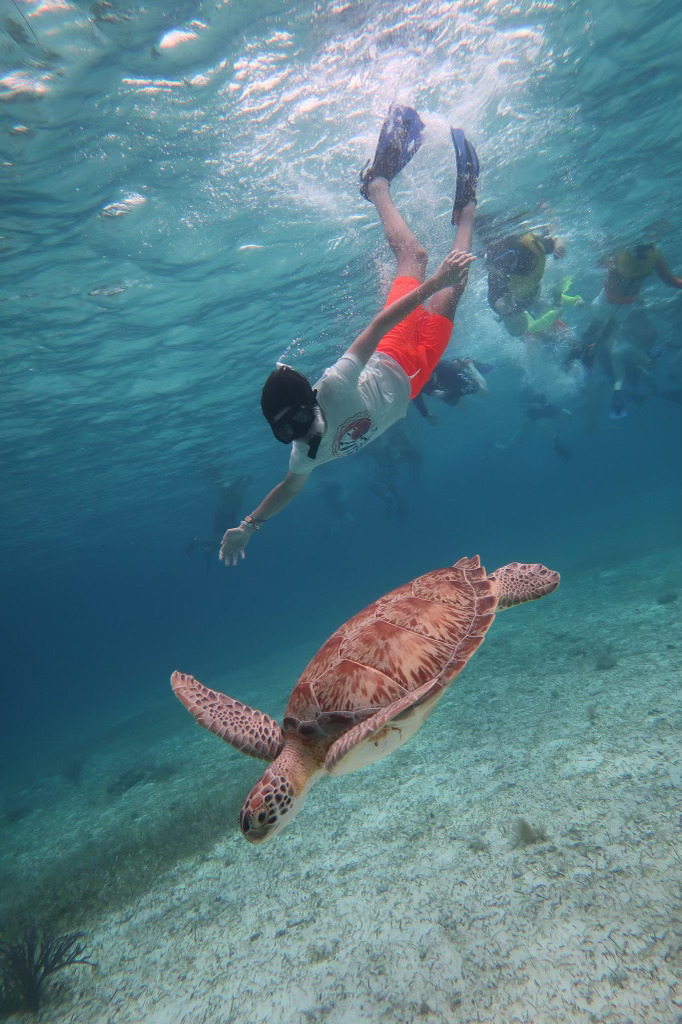
Voorhees has seen interesting species such as moray eels, sea turtles and manta rays in both her night and day dives.
While scuba diving allows for a more in-depth exploration of the ocean, there are still precautions in place to ensure the safety of reefs. Divers are encouraged to be cautious when maneuvering around coral and when trying to pick up trash.
““Anytime I see trash while diving, I pick it up. But I make sure not to mess with anything that is caught between the coral so as not to damage it,”” Raghavan said.
As a diver, a lot of discipline is required to follow all the safety regulations. When underwater, scuba divers have to learn an assortment of hand signals in order to master nonverbal communication. There are signals for safety, underwater movement and breathing techniques.
“You have to be calm in case anything goes wrong underwater,” Raghavan said. “You need to be observant, communicative and also appreciative because not a lot of people get the opportunity to scuba dive.”