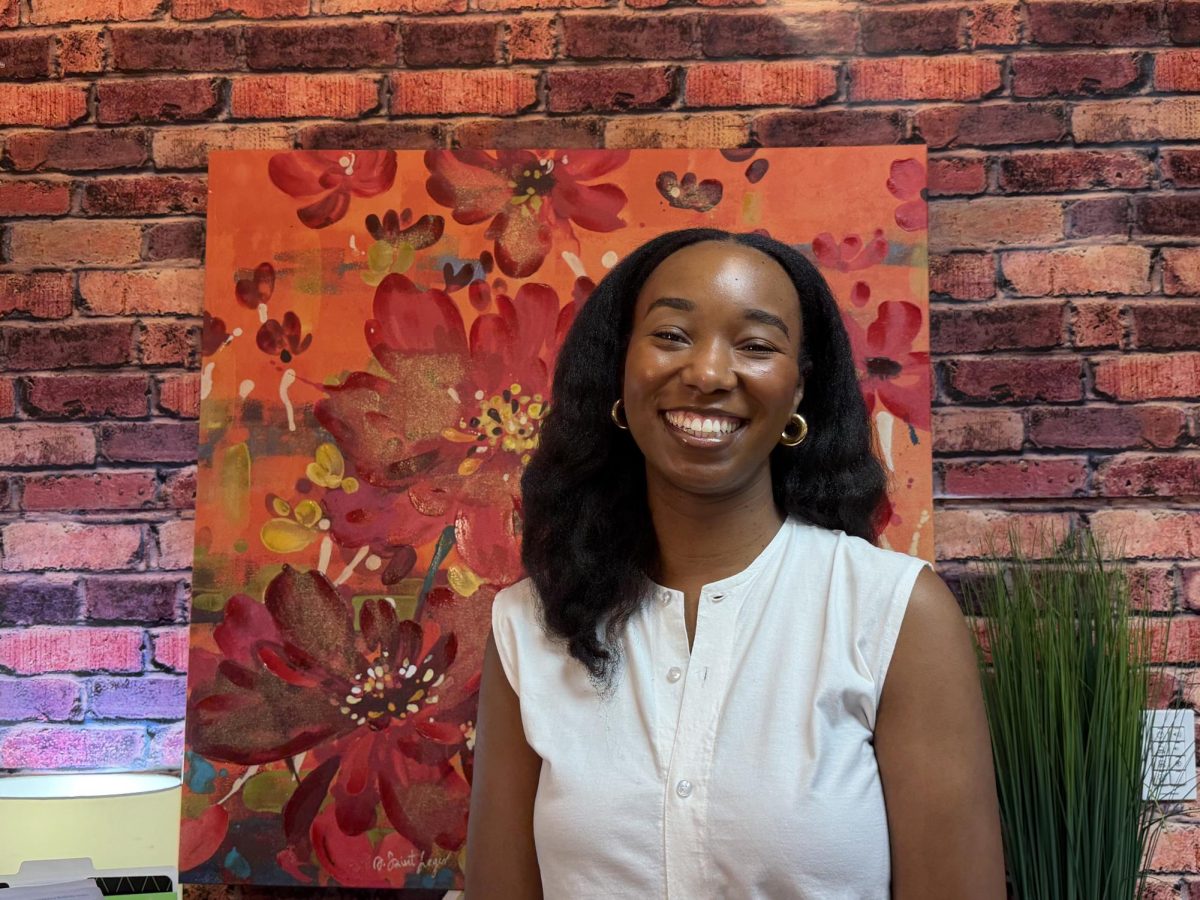
Charlotte Pattison certainly had a global childhood, arriving in each new country knowing she was bound to leave in only a few months.
Pattison grew up as a military kid—her parents were American diplomats, and the family’s life followed the rhythm of their assignments. Every few years brought a new country, a new school and a new set of customs to learn. By the time she finished high school, Pattison had lived in six countries and attended several international schools.
That constant motion shaped her, and, later, the foundation of her teaching. Pattison’s path from around the globe now shapes the way she asks students to look at the world.
At six years old, Pattison moved from Washington, D.C., to Bucharest, Romania, less than a decade after the fall to communism. She remembered the city as a place rebuilding itself.
“It was very much a place in transition and with a recent sort of tragic history,” Pattison said. “ I would say Romania had the most impact on me.”
From Romania, her family relocated to Belgium, and later Germany, each move adding a new sense of culture and identity. By the time she entered boarding school in the United Kingdom, Pattison had learned to adjust to new environments quickly.
“That’s maybe an unusual aspect of how it marked me as an adult, where I always sort of think in three-to-four-year increments,” she said. “There’s something about knowing when you’re going to leave a place that changes your relationship to that time.”
The experience of being an outsider became familiar to Pattison.
“Being an outsider was an interesting experience in helping me understand what it means to feel like the moment you opened your mouth, you were different,” Pattison said. “I was always getting made fun of for being American.”
Even after she returned to the United States for college, that feeling followed her. “My husband always says that I’m too European to be comfortable in America, and too American to be comfortable in Europe,” Pattison said.
Books, however, stayed the same no matter where she was, and sparked her passion for English. “When you’re a kid, books give you a place to go when everything else is unstable. You’ve got your books and like the world’s in them.”
Her love of reading grew into an academic path. After earning degrees from both Northwestern University and Cornell University, Pattison started her career as a writing teacher at Cornell and joined the university’s Prison Education Program. Working with students in that setting, she said, revealed the ways literature could create connections across very different experiences.
Later, Pattison moved to Chile to teach at The Grange School, a dual-curriculum Chilean and British school. At a school where most teachers and students spoke Spanish, which Pattison does not speak, she had a great amount of respect for the students’ dedication.
“When teaching English literature to people for whom it’s not their first language, you see English in a totally different way,” Pattison said.
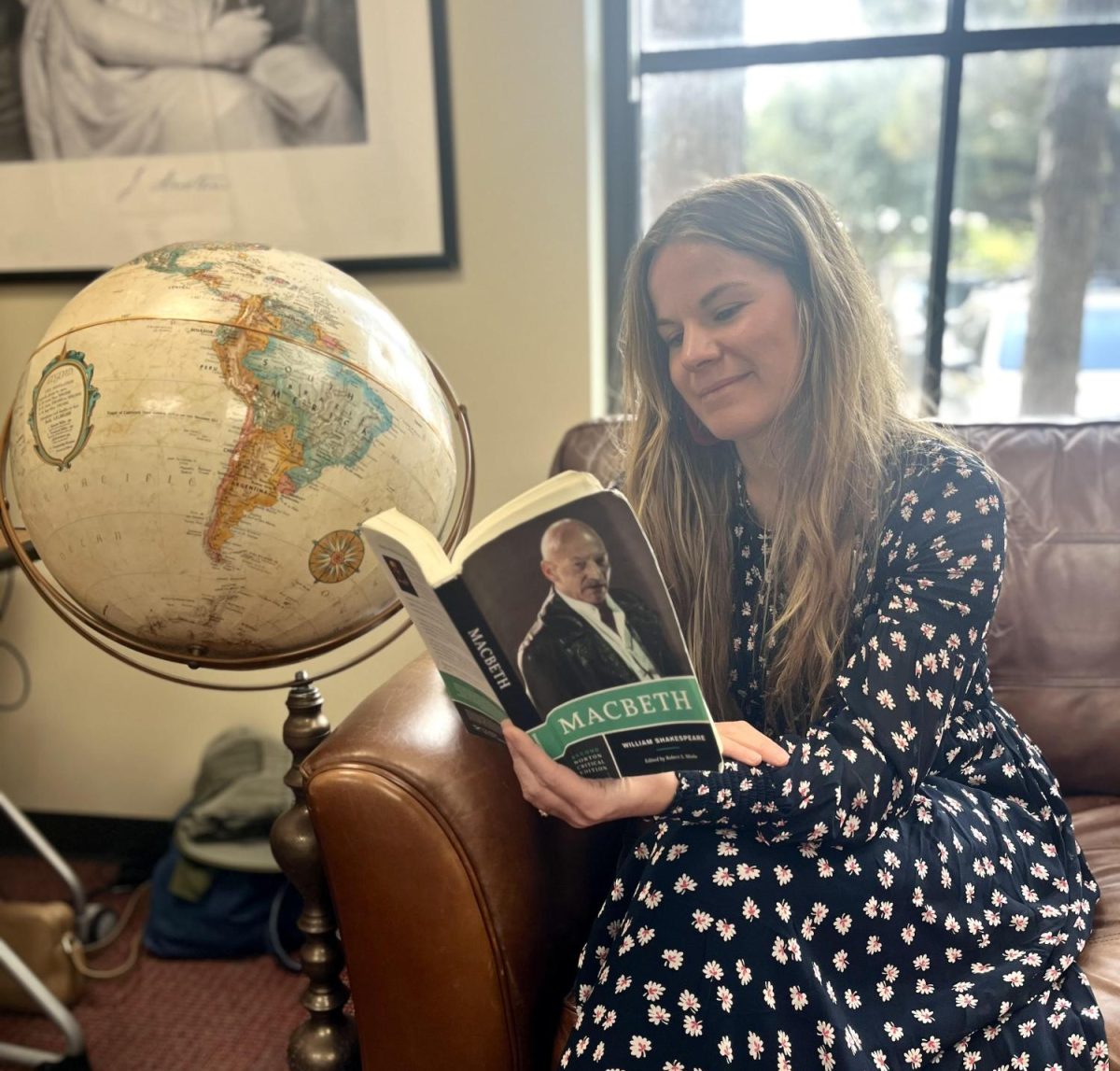
Teaching English II, she carries those experiences into her lessons.
“ I’m heavily influenced by the British system, which places an emphasis on close reading at the heart of everything,” she said. “Especially because it’s really resistant to AI.”
Now, during her first year in Houston, Pattison is ready for new experiences. With her dad from Houston, she appreciates how international the city is.
“A very attractive thing about Houston to me is how it feels like traveling to walk outside your door,” she said.
For someone who grew up traveling the globe, teaching literature offers a familiar rhythm—entering new worlds, paying attention and learning to see from the inside out.
“Living abroad, you appreciate that you have a different perspective on America,” she said. “The adaptability that comes from needing to start over your life dramatically every couple of years gives you a sense of adventure that forms my life now.”