
The duality of dance competition culture


At the Youth America Grand Prix dance competition, Joshua Jones was waiting backstage when he heard a thud. The performer onstage had fallen during their routine. Immediately, his fellow competitors celebrated their higher chance of winning.
Jones was not surprised.
“I’ve heard of similar things before, and it’s very normalized in the dance community,” Jones said.
The sophomore, who dances in Terpsichore, started performing recreationally in fifth grade at Hunter Dance Center before switching to competitive ballet and contemporary dance at the Vittaca School for Dance. By eighth grade, Jones, who attended Hogg Middle School, had advanced to the highest level at his studio and devoted a majority of his time to dance without worrying about school.
“In eighth grade, I would be burnt out from dance, but then I wouldn’t have to do homework,” said Jones, who described his time in middle school as “stupidly easy.”
The transition to high school proved more challenging. When Jones came to St. John’s, he struggled to balance dance with his academics. Many of Jones’s fellow trainees, who were homeschooled, did not understand why homework took priority over practice. Worse, his coaches did not sympathize with his situation.
“Most coaches never went to high school, and they never went to a high school like this,” Jones said. “I had a lot of talks with my coaches about how burnt out I was, and they would be like, ‘I’m so sorry, take the time off you need.’ But then I would take a day off, and they would get mad at me.”
Practice during competition season was even more intense, sometimes involving 30 hours a week. In order to prepare for the biggest competitions of the year, including the Youth International Scholarship Ballet Competition, Jones prepared solo and ensemble pieces. According to Jones, dance competitions are stressful because they neglect the performing aspect of dance, instead prioritizing the mastery of technique. Such an environment only adds pressure.
“It’s really cutthroat,” Jones said.
While many dance teachers claim that competitions are about improving, he says that many dancers just want to win so they can go to finals.
In August, Jones switched to the Academy of City Ballet of Houston, which is less strict and does not require as much rehearsal time. Jones will focus on solos for the Youth America Grand Prix and the American Dance Competition’s Youth International Ballet Competition. He also enjoys dancing in Terpsichore, the School’s highest dance level, and maintains a healthier school-studio dance balance.
“If you’re going to a studio where you don’t feel happy, you will eventually just start to dislike dance,” Jones said.
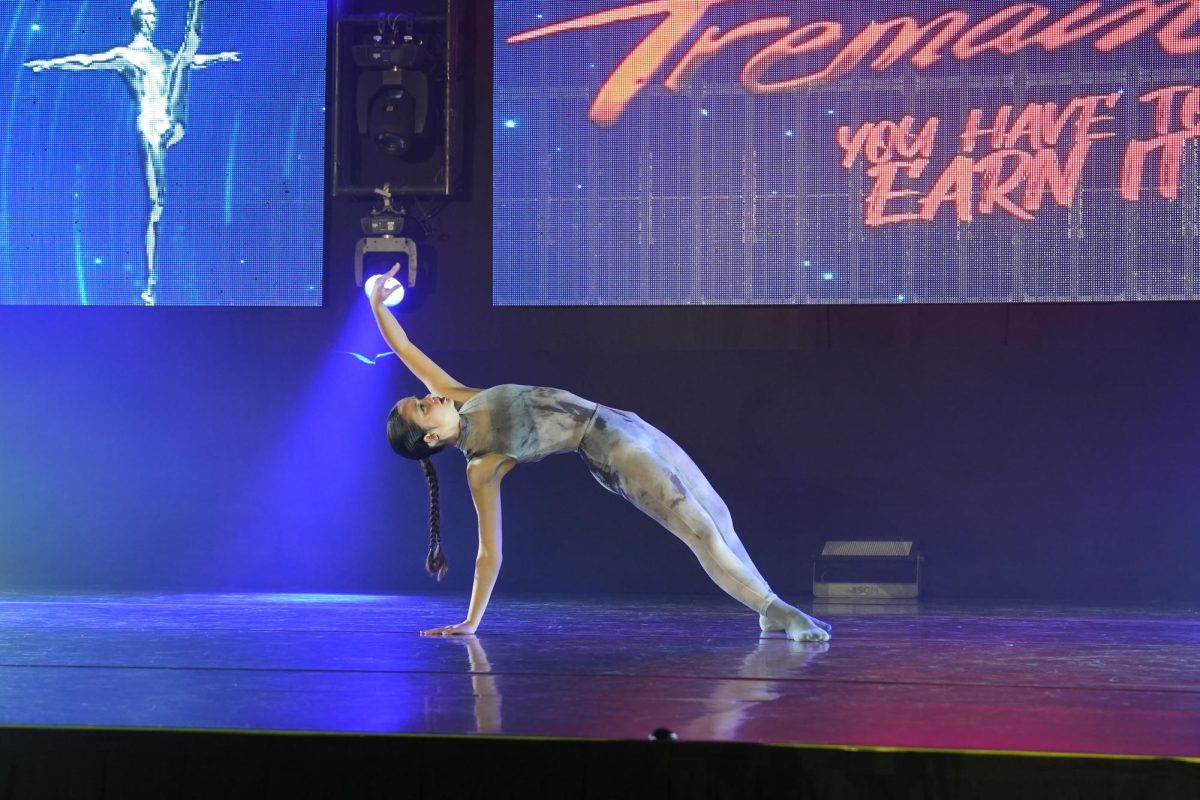
Senior Libby Agarwal competes for West University Dance Centre. She started ballet at 2, contemporary and jazz at 7 and began competing when she was 11. She loves the community at WUDC and the way dancers encourage each other to improve.
“We’ve been dancing together our entire lives, so the bonds have gotten pretty close there,” Agarwal said. “Dance naturally brings people together.”
She carries the same mindset to competitions.
“I’m not competing against other people. I’m competing against myself to do better than I did in the past,” Agarwal said. “These girls are my best friends. I don’t consider it competing against them.”
While Agarwal acknowledges that competitive dance can be “cutthroat,” she says that her teachers actively avoid fostering a harshly competitive environment, the kind they grew up with themselves. Still, Agarwal has observed how judges critique using an “old school standpoint,” in which a foot pointed at the wrong angle could dramatically reduce a dancer’s score.
Agarwal has found that the majority of the pressure she feels comes from her own desire to succeed. During her first two years of high school, she struggled to balance her mental and physical health with her schoolwork.
“I was staying up until 3 a.m. trying to have my homework done and have the technique down,” Agarwal said. “It was just too much.”
Agarwal realized she had to take a step back, so she had serious conversations with her coaches and parents about how to help her prioritize school while remaining competitive in dance. Recently, Agarwal has found herself devoting more time towards dance.
“Dance is an escape for me,” Agarwal said.
Senior Erin Bray dances at the WUDC with Agrawal. Bray prioritized school over dance until junior year, when school got more challenging. “That’s when I started to see myself maybe not go to weekly classes as much,” Bray said.
With college applications approaching, Bray has cut back further on dance, which has been possible due to supportive and understanding coaches at her dance studio.
Bray currently competes at West U’s elite senior level and performs at school with Terpsichore. Bray was the second person in ensemble history to make Terpischore as a freshman after Isabel Wallace-Green (‘15), a professional dancer. During choreography week, when choreographers teach new dances, Bray practices six hours a day.
Bray doesn’t consider her dance environment to be as competitive as other studios.
“You can not commit to colleges for dance, so there isn’t that pressure to succeed in that way,” Bray said.
Sophomore Ashi Ali enjoys dance, but instead of pointe shoes and tutus, she wears a vibrant Bollywood costume. Ali performs Bollywood at RhythmIndia. Although she does not enter competitions, her teachers expect her to perform at a high level.
“We want to become a bigger company,” Ali said. “We want to be as professional as possible.”
Ali has been dancing with RhythmIndia since she was four, advancing through the levels at the studio. Because dance has served as an outlet for her, competitiveness is not toxic with those around her, especially since spending time with her fellow dancers is one of her favorite parts of Bollywood.
“We all love each other so much, and to us, it doesn’t matter what level we’re in because it just matters that we’re friends,” Ali said. “I could be the worst dancer on the planet, and they would still love me.”
Ali’s group made history last year, on Sept. 29, becoming the first Bollywood company to perform at an NFL halftime show. To prepare for their performance at the Houston Texans game, her teacher required them to practice frequently, be in sync and have the same technique. The strict expectations challenged Ali, but she is grateful for her teacher’s guidance.
“It helps us become better dancers,” Ali said. “Everything is so much better because of how strict she is and how much she cares about each little part of our dance.”


Isabel Wallace-Green currently dances professionally at the Alvin Ailey American Dance Theater Company. Wallace-Green grew up performing with the Houston Ballet Academy, with limited onstage opportunities until joining Terpsichore.
“Growing up at Houston Ballet, we were so focused on the technique and gaining the foundation of movement that we didn’t really have that many performance experiences,” Wallace-Green said.
Yet her strong technical foundation is what helped her become a professional. She attributes Houston Ballet’s technical prioritization to building her “toolbox,” skills that she draws on in performance. Still, she observes a different skillset in her peers who trained in competitive dance.
According to Wallace-Green, competitive dancers have “a certain level of confidence.” And although she doesn’t like to use the word “tricks”, she says that former competitive dancers “know reliably where their body’s going to be and execute regardless of the pressure. Competitive dance kind of instills that in people.”
Every year, the Alvin Ailey Dance American Dance Theater tours nationally, visiting about 20 cities from January to May. The company also performs internationally. Since she joined the company, Wallace-Green has performed in Paris, London, Edinburgh, Tel Aviv and Copenhagen.
According to Wallace-Green, dance is key to bringing the world together.
“It’s very different work from social justice within a particular organization or in a more corporate setting or maybe outside on the streets protesting,” Wallace-Green said. “But it is a similar work and also an essential work when you get to do that by connecting with audiences and helping people open up their hearts.”
Wallace-Green intends to continue dancing as long as she can to promote her passion for dance.
“Dance has a really strong power to help people find the common ground of humanity,” Wallace-Green said. “And it’s very fulfilling and heartwarming to get to do it from my side of the stage with my friends and my peers, who I really love and just have a great time with.”
Wallace-Green deeply enjoys her career, although she acknowledges that it comes with performance anxiety, self-judgement and criticism. She further acknowledges that making it in the arts world is difficult, but for those wanting to take the leap, she has some advice.
“As long as you are your greatest cheerleader and your greatest champion, I think anything’s possible,” Wallace-Green said. “Believe in yourself, because you’re the only one who can make what you want to do happen in the long run.”

A shorter version of this article was originally published in the October issue of the Review.