
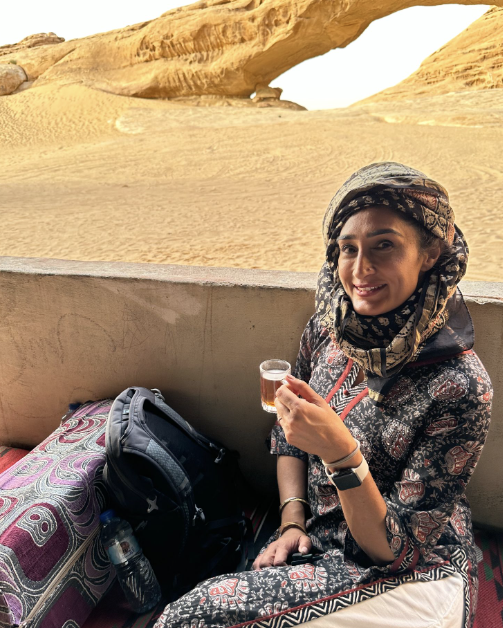
A few weeks after Sukhi Dosanjh joined the United States Agency for International Development, the events of 9/11 threw the nation into chaos. She remembers the day vividly — as a new hire at the nation’s largest soft power organization, Dosanjh traveled to Afghanistan to collaborate with America’s national military to combat terrorism, an initiative known as Barack Obama’s ‘civilian surge’.
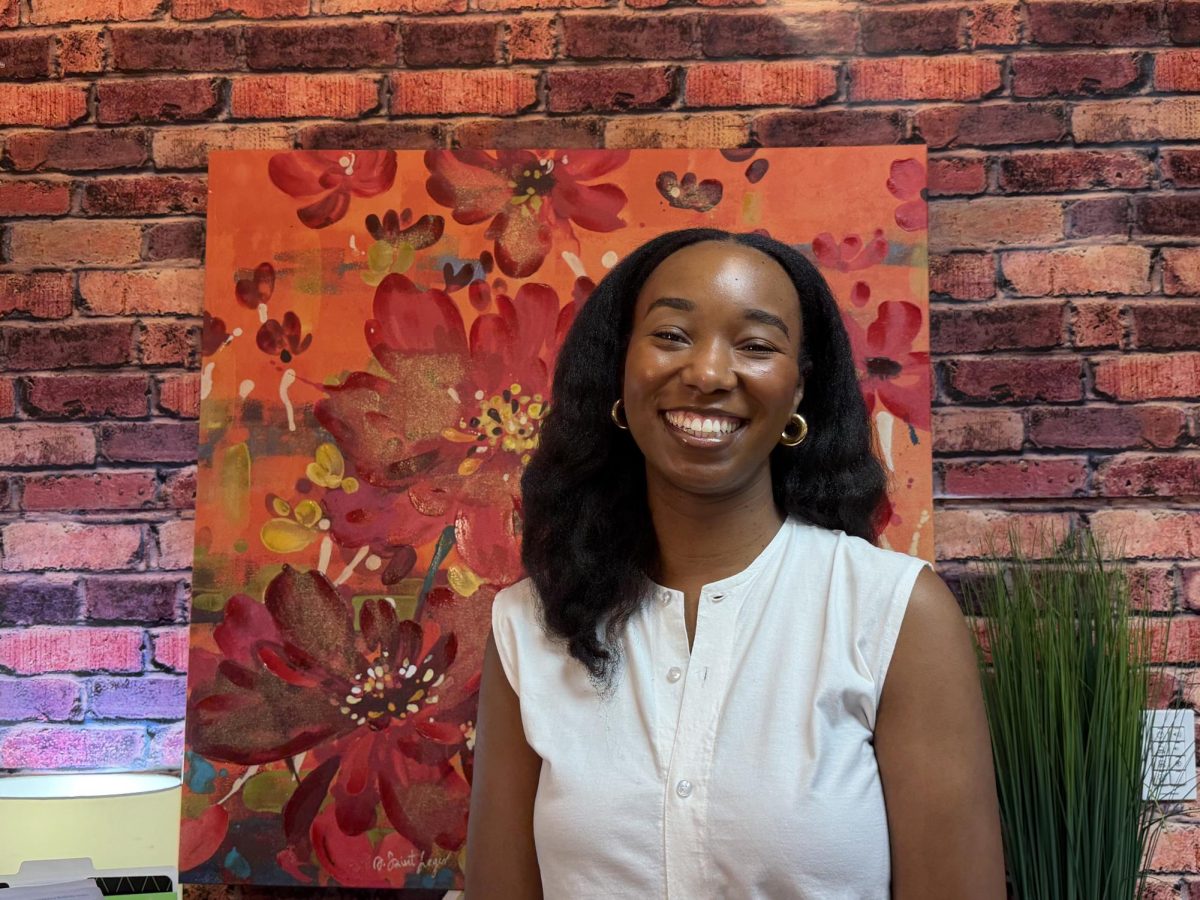
Dosanjh, mother of freshman Zoya Johl and a former Foreign Service Officer with USAID, spoke to students in a December forum about foreign aid and the annual Holiday Drive. She has supervised food security programs in over 25 countries since joining USAID in 2001.
While Dosanjh studied for her Bachelor’s degree in public policy at UC Berkeley, she applied for the Public Policy and International Affairs fellowship, a summer program supporting underrepresented groups in pursuing public service careers. In 1999, the program sent her to spend six months in South Africa.
“At the time, South Africa was going through their second election post-apartheid,” Dosanjh said. “It was a really interesting time to learn about post-apartheid policy and the change that was occurring.”
After receiving her Master’s at the University of Michigan, Dosanjh continued to work as a Presidential Management Fellow, a competitive fellowship program to create future leaders in federal service (the organization was terminated by the Trump administration on Feb. 19, 2025). Dosanjh then joined the Office of Food for Peace (now the Bureau for Humanitarian Assistance) at USAID to work against international food insecurity.
Dosanjh’s first extended trip with USAID was to Haiti in 2002. Due to the country’s hilly terrain and constant tropical storms, soil erosion inhibits crop growth, so Dosanjh managed programs that taught local farmers horticultural techniques specialized for hillside agriculture. Through terrace farming, farmers dug into the hill in order to create flat terraces. Plants would use the structures as support instead of sliding down hillsides during rainfall.
“The cycle of food security can have a big impact, so it’s important to have proper cultivation practices,” Dosanjh said.
Following her time in Haiti, Dosanjh expanded her outreach to countries like Colombia and Nepal. Because Nepal is a country prone to natural disasters like earthquakes and landslides, Dosanjh organized a multi-sectoral program to develop resilience to long-term humanitarian shocks. By analyzing areas vulnerable to food insecurity for indicators of malnutrition, Dosanjh and the multi-sectoral team created five-year intervention programs that addressed the area’s respective issues.
Because of scarcity and contamination, “We knew that creating accessibility to water and sanitation was important,” Dosanjh said.
Dosanjh’s first experience working in an active-conflict country was in Sudan, prior to its separation into South Sudan and the Republic of Sudan in 2011. Before the split, decades of civil war had displaced over four million civilians, causing widespread famine. While visiting a remote area of Sudan, Dosanjh asked the local children where they found their food, to which they replied that they thought it fell from the sky. The children were referring to food dropped by an airplane, a last-resort method used by foreign aid programs to deliver emergency aid to disaster zones.
“It really highlighted the need to work on sustainable approaches, so that even when people live in very poor conditions such as slums, through the right training and resources, they can grow enough to provide for their households,” Dosanjh said.
During her time in Sudan, one of Dosanjh’s colleagues was stopped while driving home from a New Year’s Eve party and murdered. Though it never stopped her desire to continue working at USAID, Dosanjh stresses the importance of safety.
“We were on lockdown, and it was a scary time,” Dosanjh said. “It really drove home the level of risk humanitarian workers put themselves.”
While pregnant with her first child, Dosanjh traveled to Afghanistan, driving to remote Afghan villages using government vehicles because bombshells were scattered all over the street. Dosanjh once told Zoya about a friend who was killed after driving over a landmine.
Dosanjh considers USAID the “hearts and minds” of foreign relations.
“They come in and build bonds with the people, and they try to be more diplomatic and avoid conflict, but there’s always going to be some sort of danger,” Zoya said.
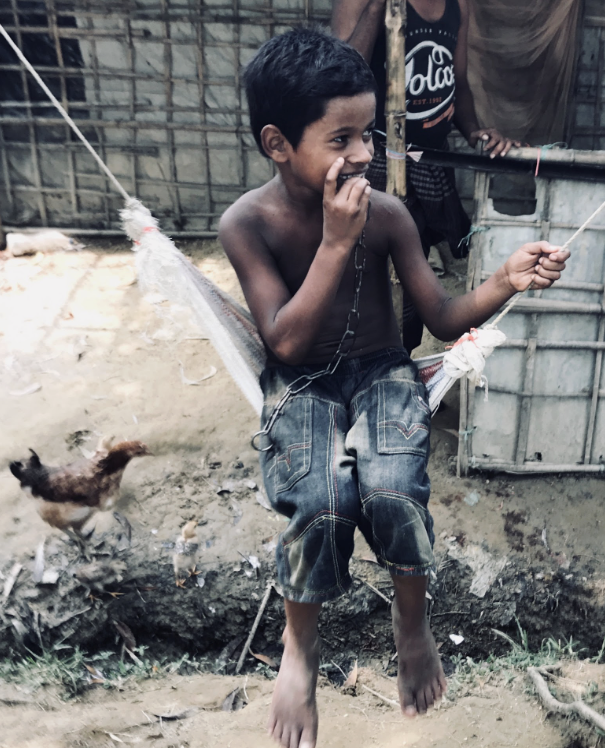
While Zoya was in elementary school, her mother would travel every other month for her work. When she returned, Dosanjh would show Zoya photos she took of girls her age living in remote villages. Though they were barely older than Zoya, the girls already had children and were working for their families, sometimes walking two hours to collect water before attending school.
“When she showed me those photos, of course it made me think, but I just went back to my normal life because I was never there seeing it with her,” Zoya said. “I was too young to understand it.”
Zoya’s perspective changed the summer after sixth grade when she and her family traveled to Jordan in the Middle East while her mom worked on a project targeting poverty in nearby Yemen. Though she didn’t see her mom’s impact on Yemenis directly, Zoya still experienced her work in diplomacy and relations. The following summer, Zoya met her mom in Nairobi, the capital of Kenya, and the poverty she saw firsthand reinforced her perception of foreign aid.
“You can’t control what situation or family you’re born into,” Zoya said. “My mom made sure to [teach us] to be grateful and help those who aren’t as fortunate.”
Established in 1961 by John F. Kennedy, USAID aimed to promote economic prosperity in developing nations. According to a Harvard study, the agency saved more than 92 million over the past two decades by combating malnutrition and diseases like tuberculosis, malaria and polio.
In July 2025, USAID was dismantled by the Trump administration.
The disappearance of USAID attributes to over 800,000 deaths, with children accounting for two-thirds of the casualties. Despite federal cuts, Congress recently passed a $50 billion bill allocated to foreign aid — a 16% decrease over last year’s funding.
Dosanjh says that although complete ramifications of the dismantlement are unclear, action must be taken to fill the gap USAID’s cuts cause to foreign aid.
“People need to continue to put pressure on Congress,” Dosanjh said. “This period is still very raw, and the State Department needs to create a more robust approach for international development and humanitarian assistance in the future.”
After she was laid off, Dosanjh has continued working as a board member for the Partnership and Immersion of Refugees, an educational mentoring program for refugee youth in Houston. Inspired by her mother’s initiative, Zoya joined the teen council at PAIR. Zoya and the council are currently raising funds to organize a field day for refugee students.
Zoya also finds inspiration from Pakistani activist Malala Yousafzai, who, at age 17, became the youngest person to receive a Nobel Peace Prize. Famous for surviving a Taliban attack at 15, Yousafzai’s advocacy for women’s education rights has grown into an international movement.
“Both my mom and Malala help marginalized communities, and I find both of their works very impactful,” Zoya said.
Though Zoya looks up to her mother, she says she wants to forge her own path. After studying public policy in college, Zoya plans to eventually shift her focus to finance while maintaining a heavy humanitarian aspect in her career.
“Working in finance shouldn’t stop me from helping others,” Zoya said. “I want community service to always be a part of me, and I don’t ever want to let it go because my mom showed me just how important it is.”
Kalyani Pandya is a senior also interested in pursuing a future career in public policy. Her passion for social issues began in her early high school years while volunteering for organizations like Brighter Bites, a Houston-based program that delivers produce to communities lacking access to fresh food and the Miracle Foundation, a foster care initiative for orphans in India.
“Whether doing field work or administrative work, I noticed that the biggest impact to social issues was through policy,” Pandya said. “I realized that this was something I could actually study in college.”
Pandya’s interest in policy also stems from her love of analyzing problems. A past Model UN competitor who currently takes the School’s U.S. Government and Politics class, Pandya plans to major in Social Policy Analysis at Rice University. The college program focuses on issues like food insecurity, healthcare and homelessness within the greater Houston area.
Pandya advises others interested in pursuing public policy to follow their dreams.
“I don’t really know what specific realm I want to focus on — there’s so many different parts of policy like environmental, health and education,” Pandya said. “If you’re passionate about an issue, definitely pursue it.”