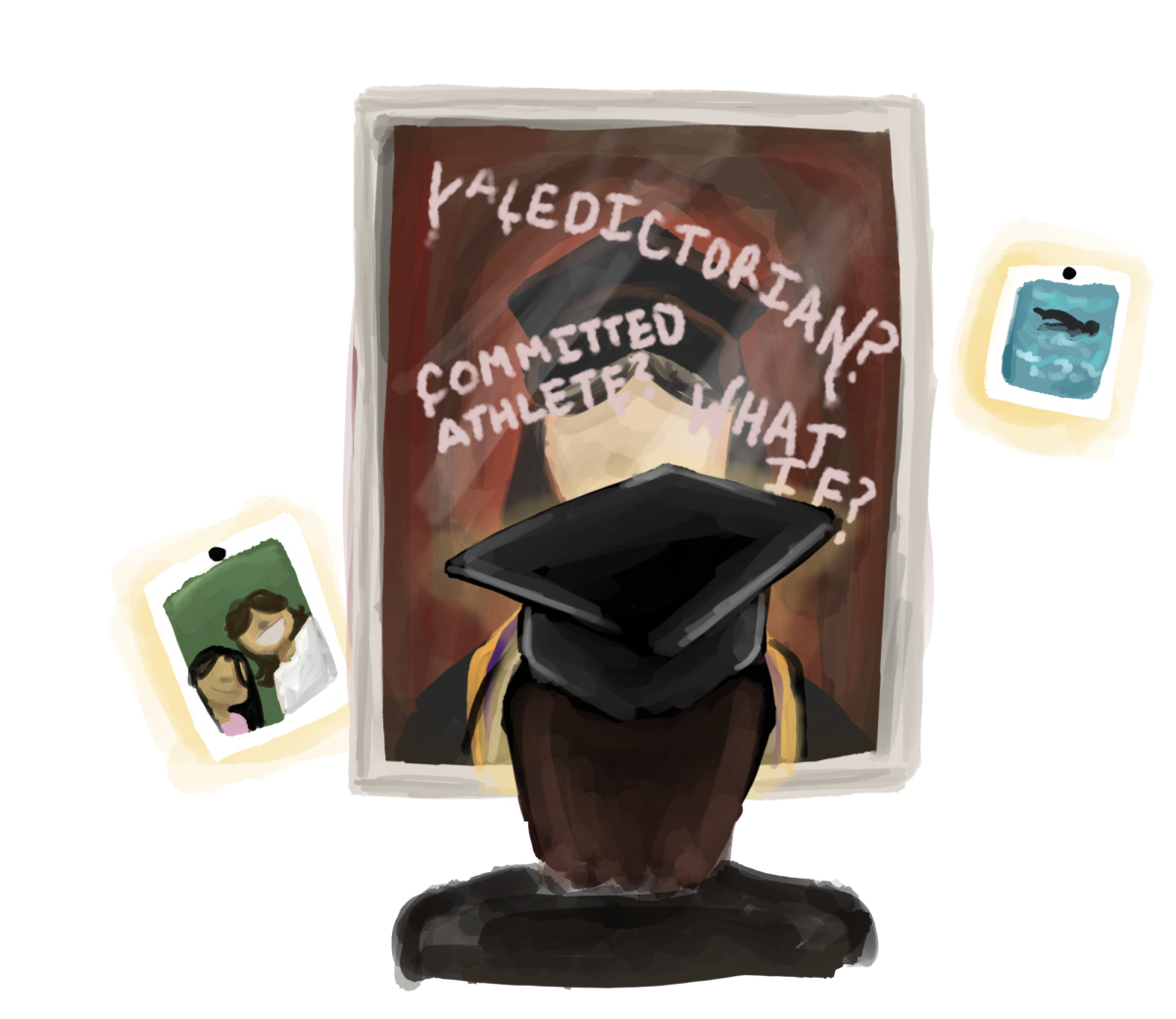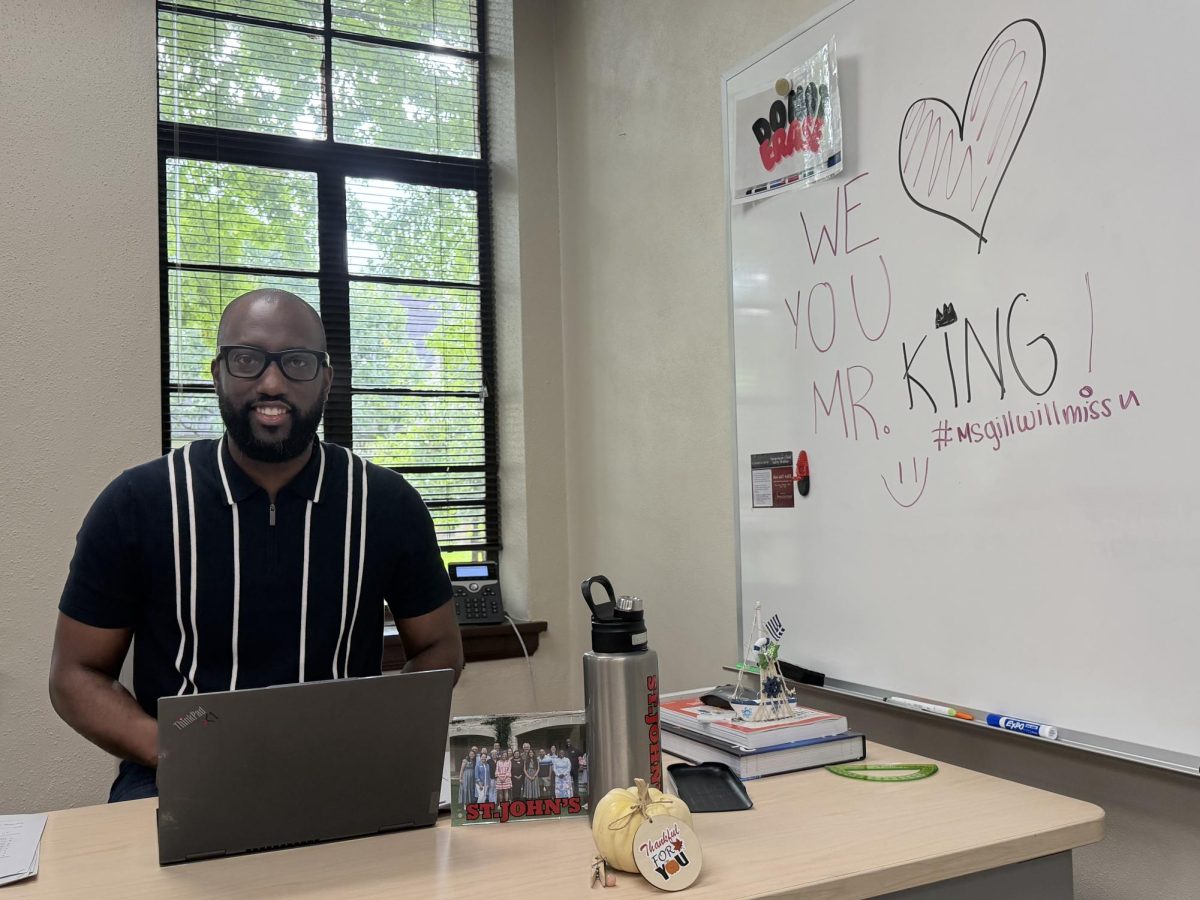

Since he became chair of the history department in 2020, Russell Hardin has gone from adapting lessons to keep up with new technology to questioning whether students’ assignments are actually their own—or even written by a human.
In Aug. 2022, OpenAI released GPT-3.5, a chatbot capable of generating anything from video game code to Shakespearean-style limericks. With over 700 million weekly active users, ChatGPT has catalyzed technology companies to release their own models, drawing global attention to the power of artificial intelligence.
Schools have suffered an abrupt awakening. ChatGPT monthly usage tokens plummeted by around 54% when school let out this past June.
At the School, a faculty committee convened throughout last school year to discuss AI’s impact—from how it could increase productivity for both teachers and students, but also how it could rack up environmental and ethical costs. Upper School English Department Head Clay Guinn, a member of the committee, says AI has led him to question how he should frame the English curriculum.
“If a machine can do the essay that I’m asking you to write better than you can, then maybe that’s not the thing that I should be asking you to do,” Guinn said.
Many universities, including Stanford, Yale and Caltech, created their own AI policies as technology advanced, which helped them stay up-to-date with integrating the technology into their classes. However, high schools are unable to replicate that simply because of their structure: while universities give their professors and department heads wide discretion to implement policies at will, most high schools strive for some amount of uniformity in policies. Therefore, school-wide and department policies, especially on new technologies like AI, require a little more time to be verified.
For any school-wide AI policy, a certain amount of consideration needs to be given to what students are allowed to use AI for different subjects. In math and science, for example, the emphasis is on the knowledge and application of real facts, making AI a useful tool for background research. Yet in the humanities, more emphasis is placed on the student’s original critical thinking and communication capability, which means students can much more easily use AI as a crutch.
As more and more jobs begin to require AI proficiency to increase efficiency, many teachers consider educating students in AI fluency to be an essential responsibility.
“The world isn’t going to ban AI,” Hardin said. “If our job is to prepare you all for success after school, then if we ban AI, we’re actually being counterintuitive to good teaching.”
In response, many humanities teachers, including Guinn, have decided to make changes to their curriculums.
“Part of what we’re doing is designing assignments so that they are less likely to be abused by AI,” he said.
According to Guinn, with many out-of-class projects, English teachers are using class time more “strategically”, giving students opportunities to start their projects early on in an effort to reduce the chance of a time crunch. They theorize that if students have more time to complete assignments, they can mitigate any temptation to cheat. According to Guinn, the focus of in-class writing is also to give teachers an idea of the student’s thought process.
“As long as we can take that snapshot of where you were after the first hour, we can look at that and see what’s changed over the editing process,” Guinn said.
In the history department, faculty are also contemplating what the transition to an AI-forward teaching style might be like. Some, like Hardin, state that assessments in their classes could go from being primarily writing based to a more balanced mix of speaking and writing. He says that as AI progresses, a student’s writing will become equal to their oral communication skills in its ability to show understanding. This more rhetoric-based way of learning is known as a “classical” style, because it is known for being the way ancient Greek philosophers taught their pupils.
“If we do this correctly, an ironic byproduct of this is that we will actually, in many ways, become more reflective of that type of education in the humanities,” Hardin said.
AI is constantly evolving. According to experts, total money spent on AI this year will total $1.5 trillion, an influx of money driving the technology at a speed that is hard for anyone, let alone institutions like schools, to keep track of. It is a certainty that education will change in the future—for now, it is simply a question of how.