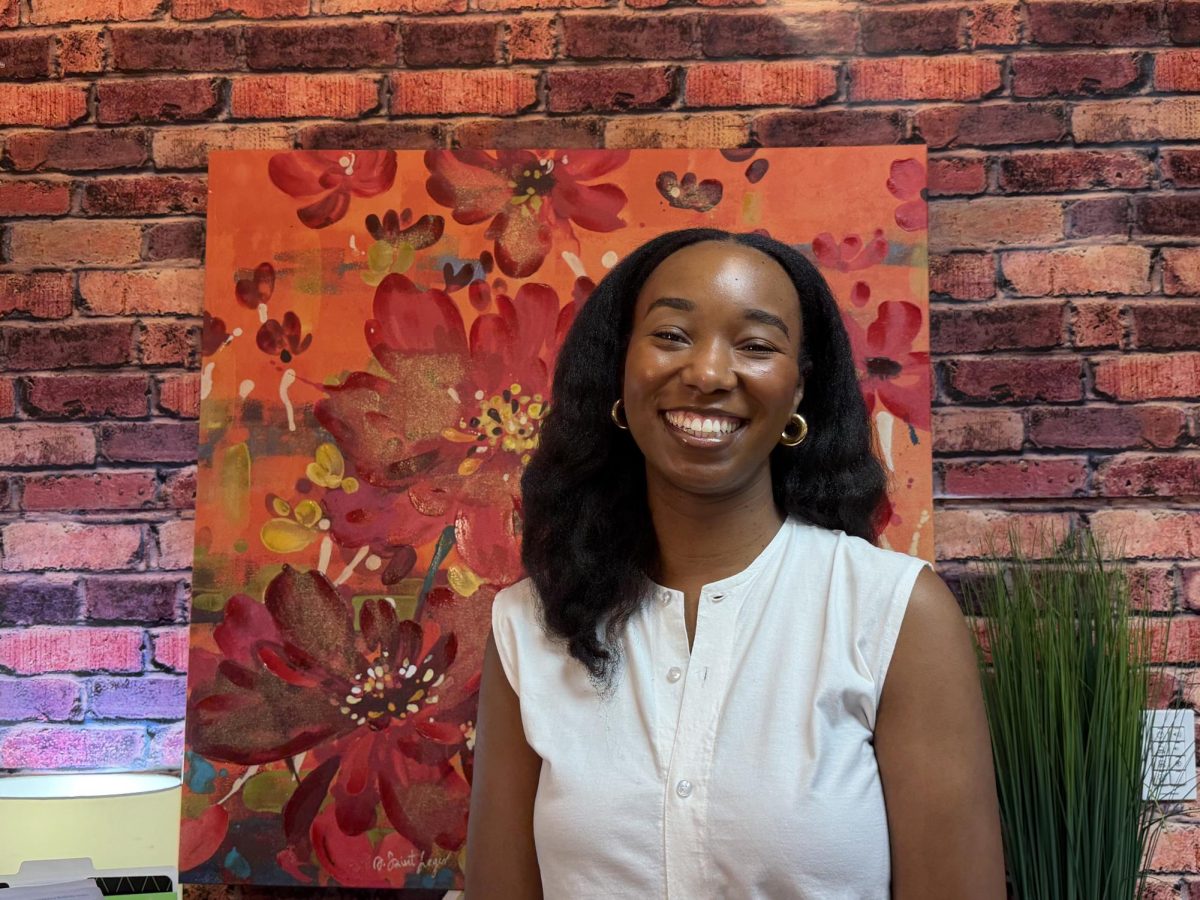

Unlike many in her class, when senior Adrianna Bejger graduates in the spring, she will have spent only two years at the School.
Bejger moved to Houston from Barrington, Rhode Island, where she attended her local public school, in her sophomore year for her father’s new job with an oil and gas company. Coming from a small town across the country, the stresses of integrating into the large school community were amplified.
“Coming from a small town, it’s a very competitive and intense environment here because the standards are higher,” Bejger said
Bejger also stresses the importance of a social life to people in similar situations as she was. In the move from one school to another, Bejger’s social life was one of the most challenging things to rebuild.
“It’s probably the most difficult because coming from my hometown, I had known kids from kindergarten through ninth grade,” Bejger said. “I had to adjust, make new friends and meet new people.”
The typical years of entry into St. John’s are kindergarten, class six and class nine. Upon entering, new students spend the first few months bonding with other students in similar positions. In class nine, the School incorporates events such as orientations and the Freshman Retreat to help freshmen form friendships, and similar events are included in kindergarten and class six.
Each year, the School also welcomes students with non-traditional entry years, and although they are few and far between, students like this do exist. Many find themselves having to navigate unfamiliar environments and communities as they miss the traditional window of time when friend groups are established and teachers meet new students.
“It definitely takes the first couple of months coming into St. John’s to acclimate to the culture and expectations because they’re juggling so many new things,” said Jennifer Kuhl, Upper School Academic Dean, “From new friends, new clubs, new activities, new classes; Everything’s new.”
After spending her sixth and seventh grade years attending Awty International School, sophomore Ellie Lewis joined St. John’s in eighth grade. She sought more rigorous sports and academic programs.
“St. John’s had a really strong field hockey team, and a lot of my teammates from my club team played here,” Lewis said.
For students who enter in unconventional years, extracurricular activities such as sports, clubs and other hobbies are an easy way to get to know their new peers. Lewis found these bonds beneficial while adapting to a new environment.
“All of my varsity teammates were really helpful in tutoring, encouraging me to meet with teachers and giving me advice in general,” Lewis said. “They were my biggest supporters.”
While Lewis transferred from a private school, many others transfer from public schools. The transition between public and private schools introduced additional challenges to a demanding process.
“In public school, you’re on your own because teachers don’t care as much,” Bejger said, “Here, teachers actually care and want you to learn and like to grow as a student.”
Junior Albert Zhou joined the School this year after attending Clements High School, a public school in Sugar Land, Texas, for two years. Upon his arrival, Zhou was surprised by the freedoms the School grants its students.
“There’s a lot more freedom here,” Zhou said. “We never had that at my old school.”
By allowing students free time, like the DaVinci period, the School pushes for student independence. As well as permitting freedom, the period allows and encourages students to pursue extracurricular activities like clubs and fine arts ensembles. Despite all the new aspects of St. John’s that required adjustment, football remained constant in Zhou’s life.
“The vast majority of my friends here are people I’ve met through football,” Zhou said.
Another difference Bejger has noticed between her former public school and St. John’s is school spirit overall.
“There’s a lot of St. John’s pride,” Bejger said. “Driving around, everyone has bumper stickers and flags in front of their houses, which isn’t as common in public schools.”
The importance of school spirit in the community is evident throughout the campus. Through themed dress days, pep rallies and Instagram posts, students exhibit exceptional amounts of school spirit in any school day.
Bejger was eventually able to find her people, but not without effort.
“I went to as many social events as possible and interacted with people in my class,” Bejger said.
The School’s welcome extends beyond country borders: sophomore Abby Hodges and her family spent their summer packing boxes in preparation for their return to Houston from England.
Hodges was born and raised in Houston before moving to Winchester, England, for three years to attend St. Swithin’s School, a prestigious independent girls’ boarding and day school. Hodges returned to Houston due to a job opportunity for her mother, who works in the oil and gas industry.
Despite the time away from Houston, Hodges credits sophomore Emily Hines for helping her readjust to the community.
“She would come and visit me in England,” Hodges said, “She’s still my best friend.”
One of the main differences between the two schools, Hodges notices, are their curriculums.
I did all three science classes at once. They taught three years of physics, three years of biology, and three years of chemistry,” Hodges said, “Math was also different. We did a little bit of everything each year and built up from that, so I’ve already done calculus and trigonometry.”
Differences in education styles make switching from one to another a big adjustment for students. Hodges found herself entering St. John’s with varying degrees of knowledge in certain subjects as expected by the curriculum.
“I haven’t done as much algebra as everybody else has, so I’m a bit behind in that, but I’m also ahead in science,” Hodges said.
While it can be challenging to adjust, the School does its part to accommodate students who enter in unorthodox years as smoothly as possible. The School’s academic rigor can be challenging for many to acclimate to, and Kuhl closely involves herself with the academic adjustment process for students who enroll in unusual years.
“Generally in the spring semester before they arrive for the fall, I do a one-on-one meeting,” Kuhl said, “That’s because there’s more options and we wanna be able to tailor the conversation to their individual needs and interests, and since they’re not yet acclimated to the culture, I try to explain to the families and students more about what the academics at St. John’s look like compared to other schools.”
After seven years of working with these students, Kuhl has valuable academic advice for a student looking to enter the School in an atypical class.
“Don’t try to take all the honors and AP classes from the beginning,” Kuhl said, “Try to find the right balance between the academics and the extracurriculars.”
After making successful transitions despite their circumstances, students have advice to give to students in similar situations.
“Take it day by day and get as many new experiences as you can,” Bejger said, “You kind of want to try out everything as soon as you get here and find your niche of friends or whatever activities you want to do.”