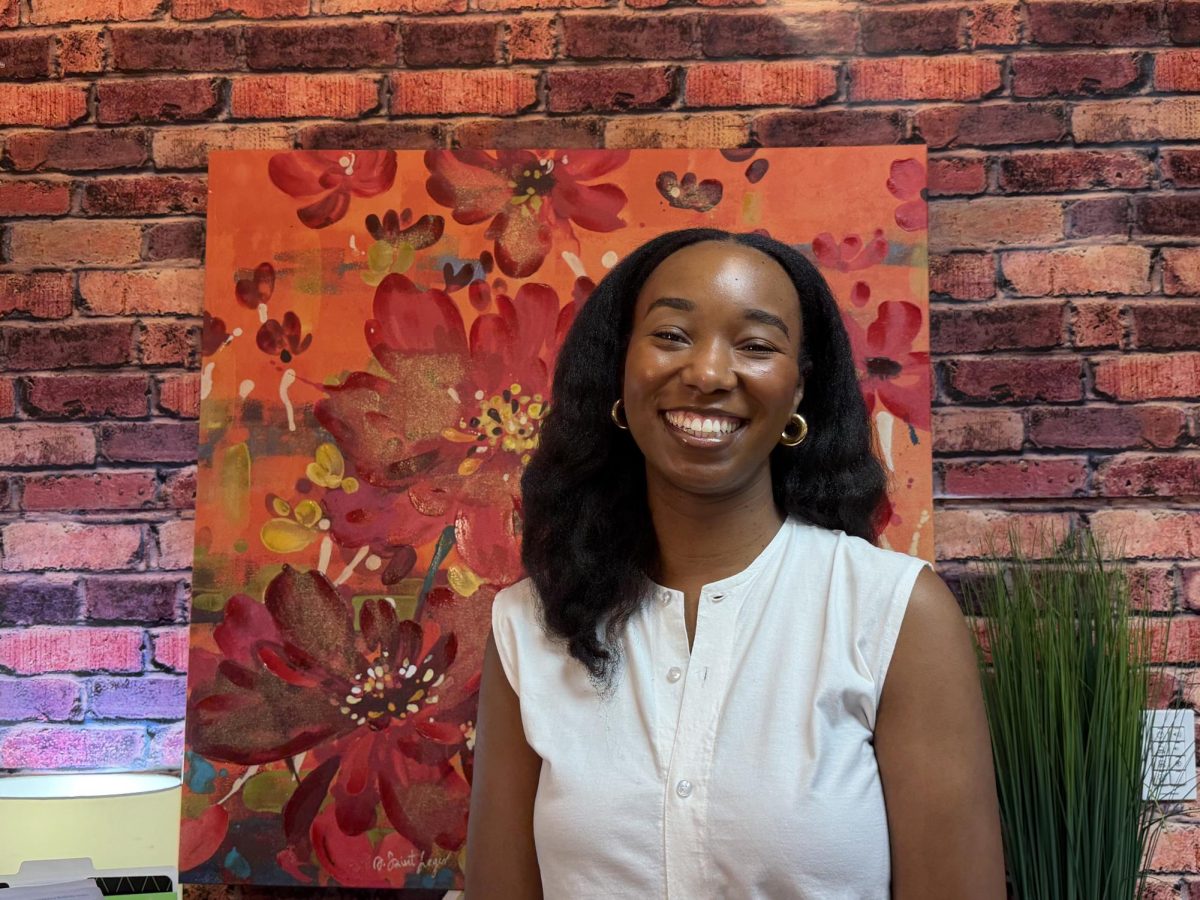

Julie Timte (‘10) has been a historian since she was eight years old. When she visited the Uffizi Galleries in Florence, Italy, for the first time, she meticulously took notes on her favorite paintings in her diary. When Timte returned to the Uffizi 22 years later, she again took notes, this time for her PhD.
Timte, who came to the School two years ago as a history teacher, is pursuing a doctoral degree in Art History at Rice University. She is examining an Italian album commissioned by the Medici family in the 1580s that depicts people in the Ottoman Empire in detailed paintings. Her research narrows in on cross-cultural interaction between the Ottoman Empire and Italy.
Timte herself has embarked on a cross-cultural journey of her own. The art history doctoral program at Rice requires students to pass translation exams in two different languages to prepare them for translating sources. Timte learned Italian and French, passed both exams and has traveled to Italy two times for research. Along with enjoying Italian food and culture, she exercised her language skills at places like the Uffizi Archives, where she conducted research extensively in Italian. The museum is home to a majority of the album she is researching, as well as many famous works by painters like Botticelli.
“It’s one of the most important museums for Renaissance art and the world,” Timte said. “It was fun to be there and feel its aura.”
Another museum that Timte is quite familiar with is the Museum of Fine Arts, Houston. After graduating from the University of Texas at Austin in 2014 with a degree in Art History and Plan II Honors, she worked at the museum for five years. She assisted in planning the layout of exhibitions and handled art objects in both the Islamic Studies and Baroque/Renaissance Art Departments.
“For a while I thought I wanted to work in the museum space, and PhDs are very helpful for advancing your career in museum fields,” Timte said. “That’s what inspired me to go back to grad school.”
Timte got accepted into Rice in 2019. During her three-year coursework period, Timte completed assignments and worked as a teaching assistant. This experience sparked her interest in teaching, and she decided to halt her journey on the museum specialization path and embark on a pedagogical career. Museum professionals also have to move frequently, which Timte wanted to avoid.
“I have a base in Houston,” Timte said. “My family’s here, and I wanted to stay here.”
Timte’s interests and preferences led her to the School in her sixth year of working on her doctoral degree. During the alumni’s first year teaching at the School, she ended up having little time to work on her dissertation but did not find the transition jarring.
“There were things that I had to adjust to and learn really fast, but it was really comfy to come back to a place that I spent four years of my life,” Timte said.
Timte has been pursuing her degree for seven years now. Her goal is to complete her dissertation by this summer. Her game plan is to take it one step at a time, working on her dissertation during evenings and weekends.
“My deal with myself now is that I have to work on it every day, even if it’s reading a paragraph in a secondary source or writing one sentence,” Timte said.
Many doctoral students spend their time alone at home or in archives, researching and writing. Timte is glad that her dissertation experience has not been so “isolating” due to her frequent interactions with the School’s community. Her fellow faculty provide advice and support.
“There have been better days and worse days being so busy with grad school work, but I’ve been very grateful for everyone here at St. John’s: the students, the faculty members. Everyone has been so kind about my process.”