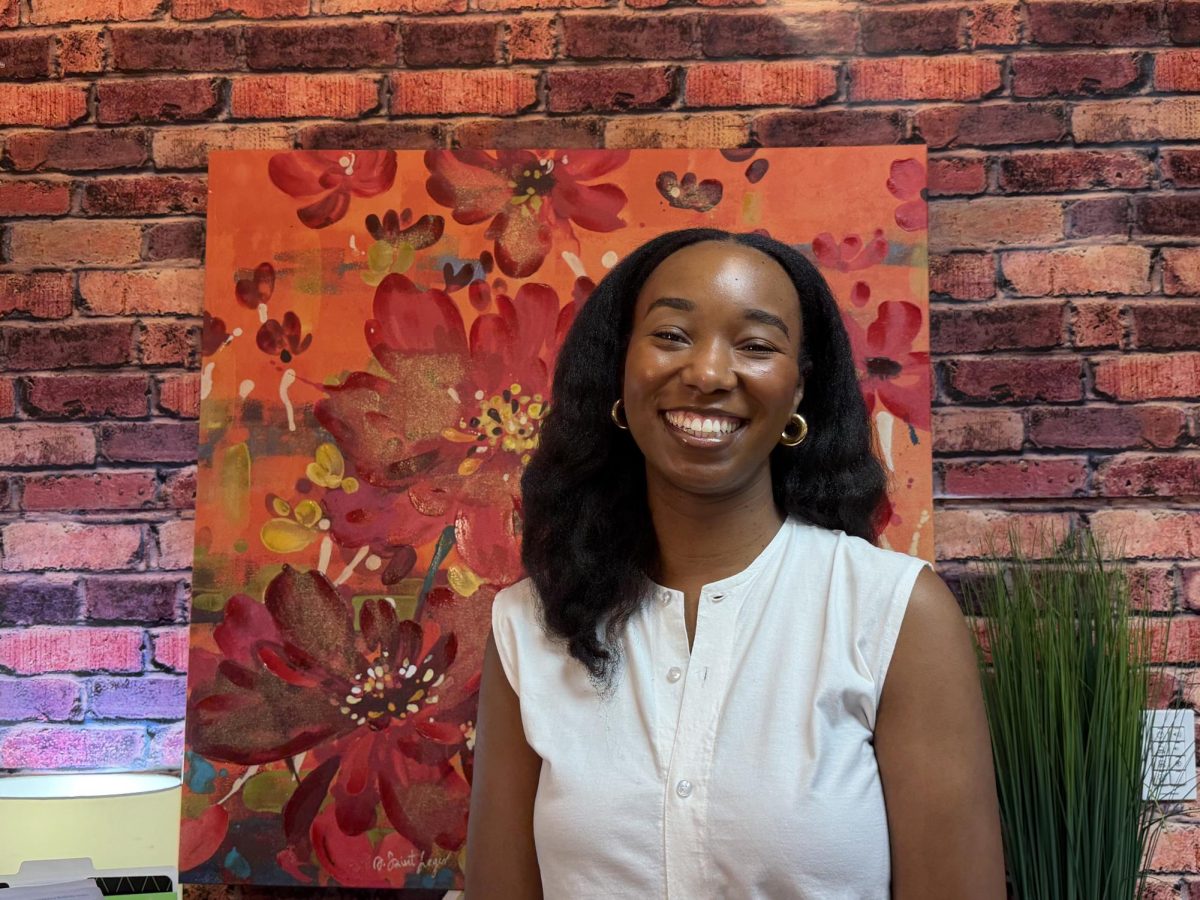

Not many four- and six-year-olds know the story of King Charles I losing his head to his people in 1649. But Reverend David Goldberg’s kids love the tale.
Goldberg is currently researching the exile of King Charles II, the beheaded king’s son, for his doctoral dissertation at the University of Oxford while working full-time as the School’s new Director of Spiritual Life. For his research, Goldberg focuses on the perspectives of the Royalists, those who supported King Charles II, along with ecclesiastical history. He wanted to study topics sparsely researched by the Academy, or the greater community of university scholars.
“That’s what doctoral research is all about. It’s not the degree; it’s not even preparation for teaching,” Goldberg said. “It’s about engaging in an area that the Academy doesn’t know about and then bringing that to light.”
Goldberg grew up in a family of Anglophiles, or admirers of British culture, which led him to apply to Oxford for his undergraduate career. After obtaining a Bachelor of Arts in Theology, he achieved a Master in Islamic Studies at the University of London and a Master in Divinity from a Virginian Episcopal seminary.
Unlike American PhD programs, Oxford does not require coursework to be completed during their doctoral program, meaning that Goldberg did not have to attend classes before starting his research. He spends several weeks per year in residence, attending seminars and researching, but mostly works remotely. He has been working on his dissertation for the past four years.
The majority of Goldberg’s research takes place in archives, scholarly havens full of historical manuscripts. At the beginning of his doctoral work, he used to travel back and forth to London five times a year to visit archives, but he now goes less frequently. He has visited archives like the British Library, the Bodleian Library and Durham Cathedral Library.
“You’ll be the first person reading that material many times in centuries, which is an amazing privilege,” Goldberg said. “But you do that and you discover, ‘oh, my word, there’s so much that is not online.’”
Goldberg says that online content, whether historical or not, does not reveal the whole story.
“Look at your own Google Drive. If someone were to write a biography of you, how accurately would that Google Drive reflect who you are?” Goldberg said.
Despite the travel and additional labor required, Goldberg champions the benefits of going back to the source.
“One of the things that we need to do more of, as historians, is encourage students to go beyond what they can find at their fingertips,” Goldberg said. “Because if we just rely on that, we’re gonna be prejudicing our research in a way that will do an injustice to telling the stories of the past.”
But along his research journey, Goldberg has also become “acquainted with failure.” After his first two years of doctoral research, Goldberg submitted an application called Transfer of Status in order to continue working on his dissertation. Two Oxford faculty assessed a portion of his dissertation’s chapter and an outline of the remainder of the dissertation. Goldberg failed this benchmark and had to resubmit, which he says made him a better scholar.
“The learning process is so much more than the outcome of the assessment. It’s what you learn from it,” Goldberg said. “The art of all of this is to look at those failures or shortfalls as opportunities to learn and grow.”
Ever since his eye-opening experience with failure, Goldberg has been preaching about the value of failure, including during his first Chapel talk to the Upper School. Although many would prefer to avoid failure, Goldberg says there is no shortcut around it and that it is ultimately valuable.
“That’s how you make room for growth, and that’s life. You can’t bypass that,” Goldberg said. “There’s no expediting those moments that are frankly humbling.”
Goldberg comes to the School on weekends to work on his dissertation in his office. He has two years to finish it and aims on publishing it in the future. He plans to do the majority of his research during the summer. During Thanksgiving break, he will travel to London and Durham to visit archives.
In the meantime, Goldberg balances his job, his research and his work as a parent. He says that having many pressing responsibilities on his plate spurs his productivity because he has to figure out “creative ways” to get all of them done and procrastinates less as a result. One of his responsibilities as a father involves taking his daughter to games where the junior varsity cheer team performs.
“While she is staring at the JV cheerleaders trying to imitate what they’re doing, I’m going to hopefully get some time, if the sun isn’t too bright, to get on my phone and read some manuscripts.”