Imagine a Saturday afternoon when you’re looking for something new to read. You walk into Barnes & Noble, skim the back cover of an appealing book and decide it’s worth reading. So you put the book back on the shelf, pull out your phone and promptly visit the Amazon Bookstore. After all, you’ll get a better price online, plus free shipping right to your front door.
This seemingly harmless scenario illuminates a troubling trend — the world’s dependence on Amazon.
I didn’t realize the effects of online shopping until my local Barnes & Noble was booted from its cozy corner on Holcombe Blvd. The moment I heard of the closing, I rushed to Vanderbilt Square to stock up on murder mysteries, board games and anything else I could get my hands on, as if hoarding the store’s products could somehow keep it in business.
The 2022 Barnes & Noble closure followed the shutdown of two Houston Half Price Books locations in 2019 and 2021. As a naive tween, I didn’t realize what was happening at the time.
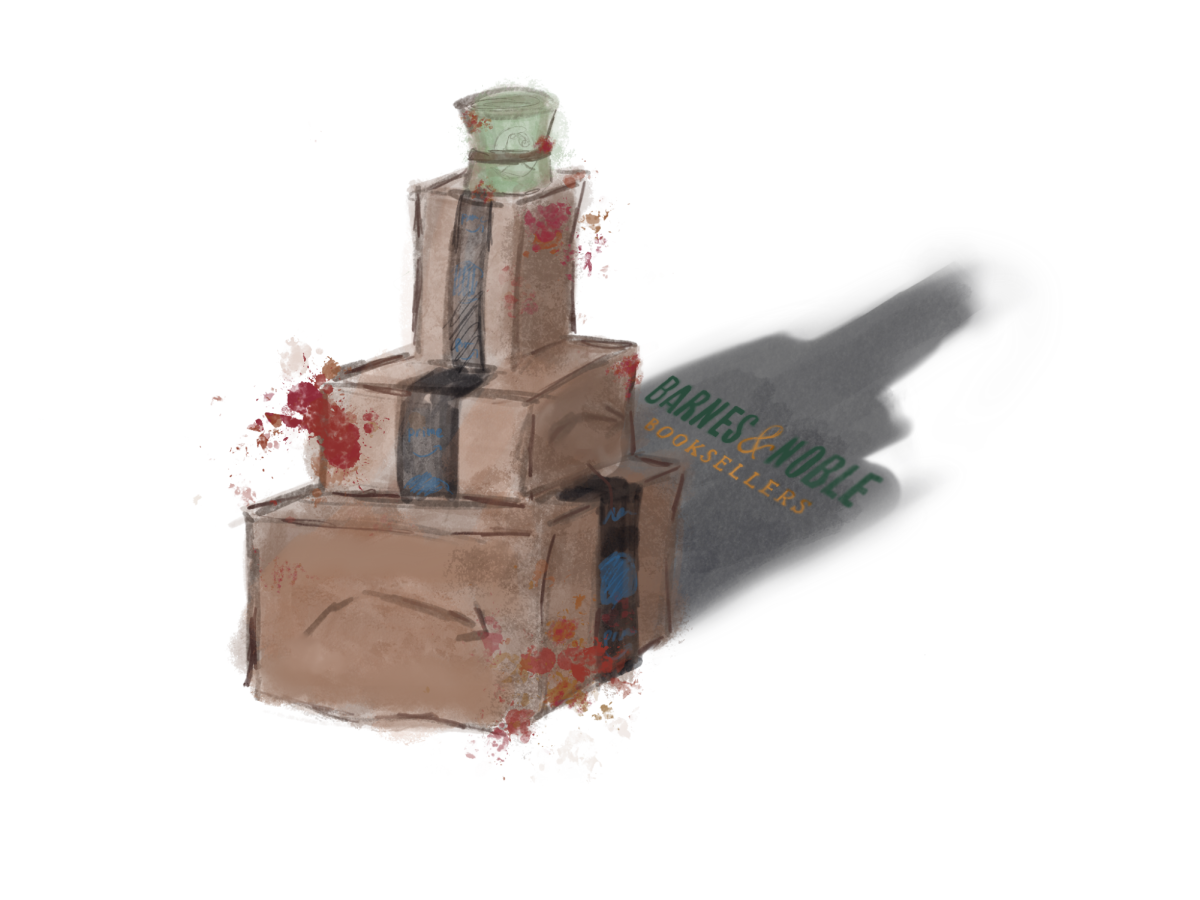
Amazon has lost billions of dollars selling books at extremely cheap prices, attracting countless customers while eliminating bookstores like Barnes & Noble. Visiting an actual bookstore and ultimately ordering off Amazon wastes employees’ time, messes up the store’s inventory and takes advantage of its resources — only to help a competitor out in the long run.
Hundreds of thousands of businesses make the choice to sell through Amazon instead of competing with the powerhouse. Yet this decision comes with consequences — in addition to paying a flat percentage to Amazon for each item sold, sellers must handle shipping costs on their own or pay Amazon to deal with such costs. Couple those prices with advertising fees to boost sales, and many sellers end up paying half of their earned revenue to Amazon.
Small businesses can’t win. Those who sell through Amazon sacrifice control of their business to increase their reach, in addition to the risk of falling prey to mounting fees and competing sellers on the same platform. Those who run their own stores maintain autonomy at the risk of being squashed by Jeff Bezos’s empire.
As small businesses fail, Amazon succeeds. And as Amazon gains control, the power it can wield is sickening. Will low prices that tempted buyers in the first place increase when competition disappears? Will product quality deteriorate? Will avid readers be able to do anything about it?
Next time you try to pull up Amazon while visiting your local bookstore, think again. If you don’t, your favorite business might not be around for much longer.